
Your cloud infrastructure is only as secure as its weakest point. Most small business owners move fast to adopt cloud services but lag behind on security hardening, leaving gaps that attackers actively exploit.
Cloud vulnerability assessments reveal these gaps before criminals find them. We at RIPE INNOVATION INC. help businesses identify misconfigurations, permission errors, and other exposures that put data at risk.
Why Cloud Breaches Cost More Than You Think
The Financial Impact of Cloud Data Breaches
Data breaches involving cloud environments cost companies an average cost of a data breach, according to IBM’s data breach report. For small business owners, that figure represents a catastrophic financial hit. What makes cloud breaches particularly damaging is the time required to detect and contain them. IBM found that organizations take around 216 days to identify a breach across multi-environment setups and another 76 days to contain it, totaling nearly 292 days of exposure. During that window, attackers access customer data, intellectual property, and financial records. The financial damage extends beyond the immediate breach cost-you face regulatory fines, notification expenses, legal fees, and reputational harm that can take years to recover from.
The Speed Mismatch Between Deployment and Security
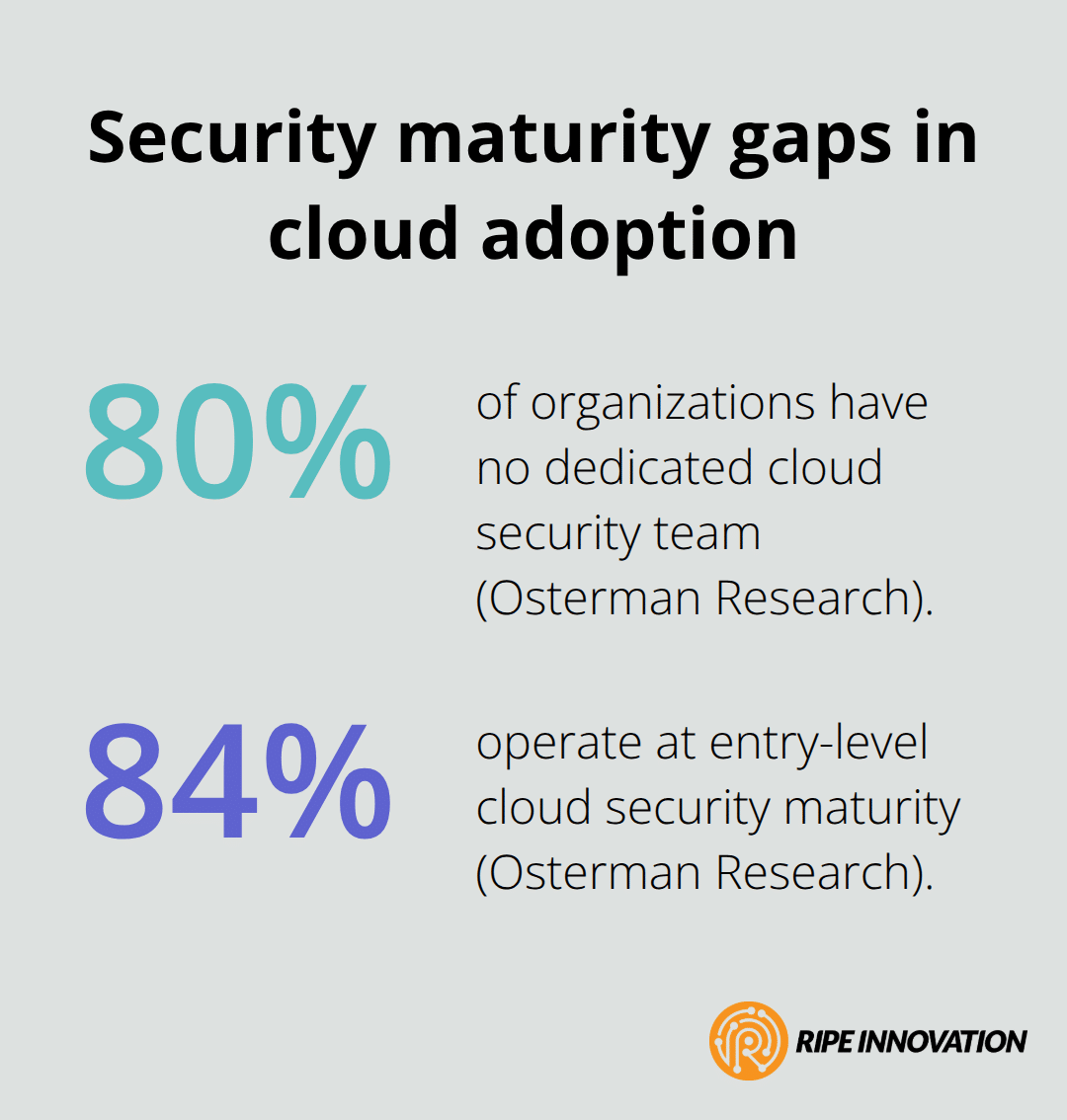
The real problem is the speed mismatch between cloud adoption and security maturity. Most small businesses deploy cloud services within weeks but lack the security infrastructure to match that velocity. Osterman Research found that roughly 80 percent of organizations have no dedicated cloud security team, and 84 percent operate at entry-level security maturity. This gap exists because cloud deployment feels straightforward while security feels complex.
You can spin up a new application in hours, but securing it requires continuous monitoring, regular assessments, and remediation workflows that many teams never establish.
Compliance Mandates and Regulatory Risk
Compliance requirements add another layer of urgency. If your business handles healthcare data, payment card information, or personal customer details, regulations like HIPAA, PCI-DSS, and GDPR mandate that you identify and fix vulnerabilities on a defined schedule. Failing a compliance audit triggers penalties and audit costs that drain resources from growth initiatives. Cloud vulnerability assessments close this gap by identifying exposures before regulators or attackers find them, giving you the visibility and documentation needed to demonstrate due diligence to customers, auditors, and stakeholders. Understanding what these assessments reveal is the next step toward building a stronger cloud security posture.
What Assessments Actually Uncover
Misconfigurations: The Invisible Threat
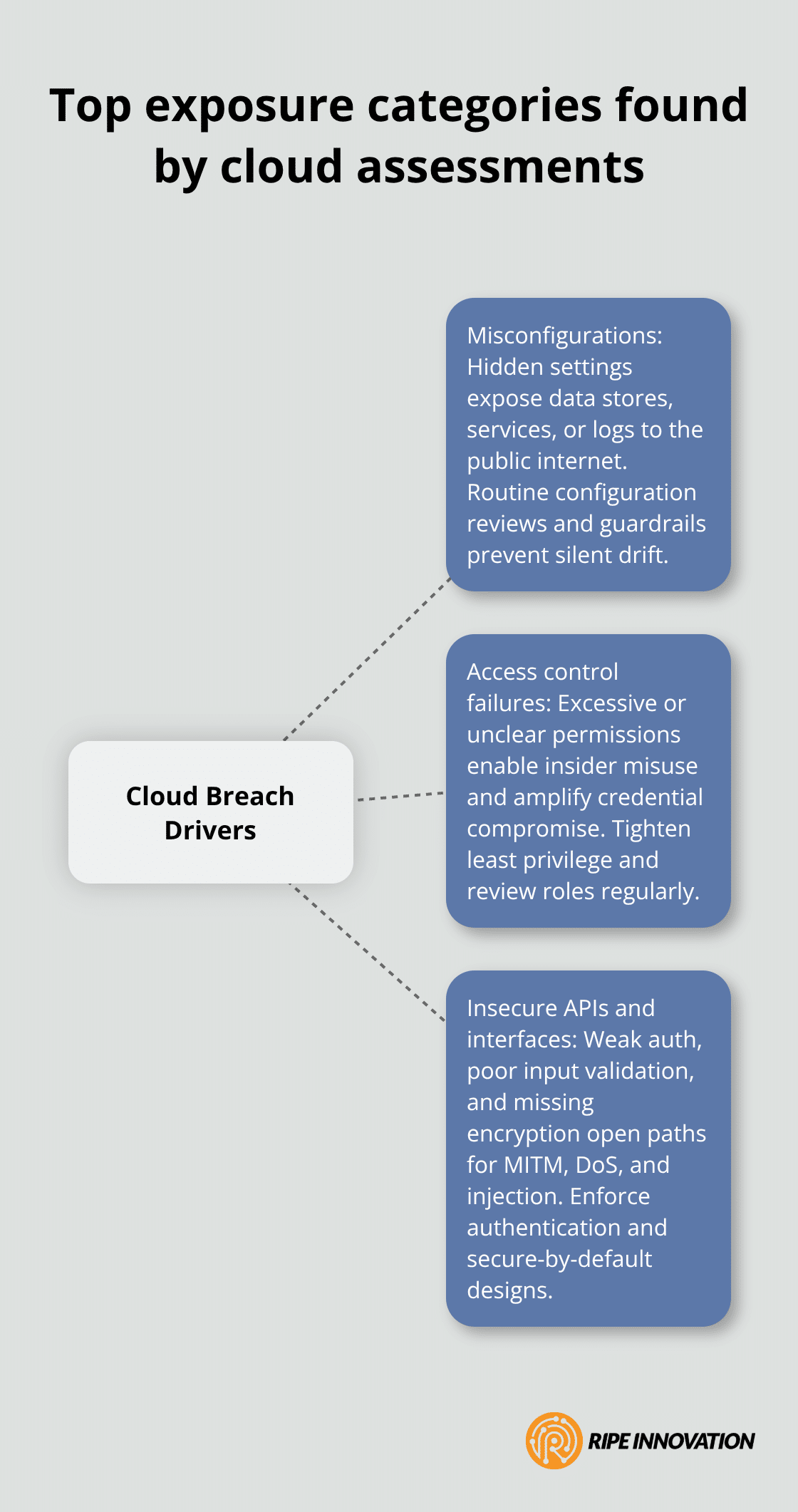
Cloud vulnerability assessments expose three categories of exposures that attackers actively hunt for. Misconfigurations dominate the threat landscape because they remain invisible to most teams. The NSA identifies cloud misconfigurations as the single most prevalent vulnerability, yet organizations often fail to notice them until an assessment reveals the problem.
Real-world damage illustrates this gap: Toyota’s 2023 data leak exposed 2.15 million records from a misconfigured database that sat accessible without authentication for over a decade. Assessments scan your cloud environment systematically, checking whether storage buckets require passwords, whether databases expose themselves to the public internet, and whether logging is actually enabled. More than 31% of cloud breaches occur due to misconfiguration and manual errors, making this the fastest path to compromise.
Access Control Failures: Permission Sprawl
Access control failures create the second major exposure category. Assessments reveal which team members can access resources they shouldn’t touch and which third-party integrations hold excessive permissions. Identity and access management gaps run deep: 52 percent of organizations lack full visibility into what resources a given user can actually access. This blind spot matters because insider threats and compromised credentials become impossible to contain when permissions sprawl unchecked. Assessments map these permission structures, identifying accounts with admin rights that should have read-only access and service accounts with standing access to production systems.
Insecure APIs and Interfaces: Attack Vectors
Insecure APIs and interfaces expose systems to man-in-the-middle attacks, denial-of-service exploits, and SQL injection when APIs are misconfigured or poorly coded. Assessments test whether your APIs require authentication, whether they validate input properly, and whether they encrypt data in transit. These three exposure categories account for the overwhelming majority of cloud breaches because they’re preventable through systematic scanning and remediation.
Moving From Discovery to Action
The assessment process itself forces you to answer hard questions: What data sits in your cloud? Who can access it? How do you know if someone accessed it when they shouldn’t have? These answers form the foundation for your remediation strategy, which requires selecting the right tools and establishing a cadence that keeps pace with your cloud environment’s growth.
Building Your Assessment Program
Map Your Cloud Footprint First
Cloud vulnerability assessments work only when you establish a repeatable process that fits your team’s capacity and your cloud environment’s growth rate. Start by mapping your current cloud footprint-document every application, database, storage bucket, and API you operate across all providers. This inventory becomes your assessment scope. Small businesses often discover they’ve deployed resources they forgot about, which creates blind spots attackers exploit. Once you know what exists, you can select tools and establish scanning schedules that actually match your infrastructure.
Choose the Right Tool for Your Situation
The tool selection matters far less than the discipline of running assessments regularly and acting on findings. Nessus catalogs more than 100,000 known vulnerabilities and handles diverse systems well, but demands substantial configuration effort and technical skill. Qualys VMDR offers cloud-native scanning with continuous monitoring and built-in threat intelligence, though it carries higher costs for smaller teams. OpenVAS provides free scanning with regular updates, yet requires strong technical knowledge to operate effectively. If your environment runs primarily on Microsoft infrastructure, Defender Vulnerability Management integrates directly into your Windows ecosystem and delivers risk-based prioritization without extra licensing.
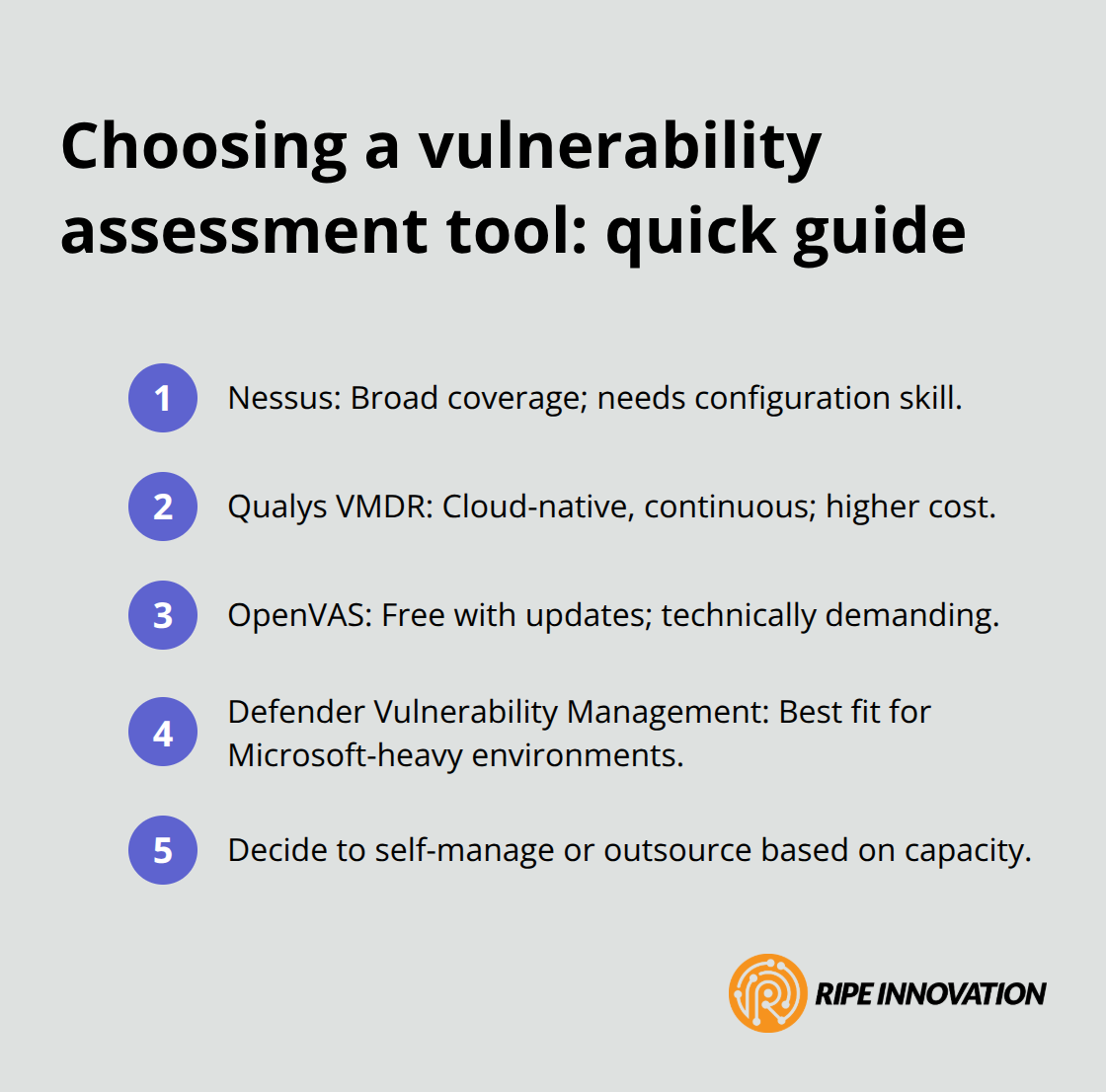
The real decision hinges on whether you want to manage the tool yourself or outsource the work. Outsourcing costs more upfront but eliminates the learning curve and staffing burden.
Establish a Monthly Assessment Rhythm
A monthly assessment rhythm serves as your baseline-quarterly assessments leave dangerous gaps, while weekly scans overwhelm teams with noise. After each scan, prioritize findings using the Common Vulnerability Scoring System, which rates vulnerabilities 0 to 10 for severity. Focus remediation on critical and high-severity issues first, addressing low-severity findings as resources allow. IBM’s 2024 Cost of a Data Breach Report shows known unpatched vulnerabilities caused roughly 6% of breaches, while unknown zero-days triggered about 10%, meaning timely patching directly reduces breach probability.
Set Clear Remediation Timelines
Set remediation timelines based on severity-critical vulnerabilities warrant fixes within 48 hours, high-severity within two weeks, medium within 30 days. Track remediation progress in a simple spreadsheet or ticketing system so leadership sees the work happening. The biggest mistake small business owners make is treating assessments as compliance checkboxes rather than operational tools. Assessments only protect you when findings trigger actual fixes, which requires assigning ownership, tracking deadlines, and measuring completion rates.
Final Thoughts
Cloud vulnerability assessments separate businesses that protect their data from those that discover breaches months after attackers have already extracted it. The financial stakes are real: a data breach costs your business an average of $4.45 million, takes nearly 292 days to identify and contain, and damages customer trust in ways that take years to repair. Regular assessments compress that timeline dramatically by catching exposures before they become incidents.
Three concrete actions launch your assessment program. Map your cloud footprint so you know what you’re protecting, select a tool that matches your team’s technical capacity, and establish a monthly scanning rhythm with 48-hour remediation timelines for critical vulnerabilities. This discipline separates businesses that stay ahead of attackers from those that react after damage occurs. Cloud vulnerability assessments work only when you treat them as operational tools rather than compliance checkboxes.
We at RIPE INNOVATION INC. help businesses implement vulnerability assessments and remediation workflows that fit their budgets and technical capacity. Your cloud infrastructure deserves protection that matches the speed at which you deployed it.